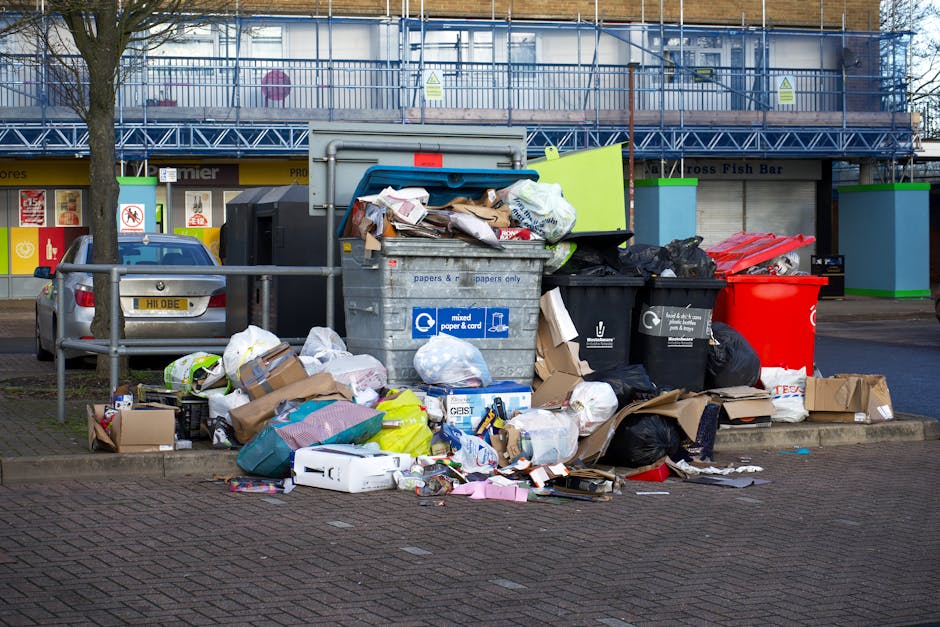
End-of-tenancy rubbish costs for Deptford renters: a practical guide to what you may pay, what affects it, and how to keep it under control
Moving out is stressful enough without a hallway full of broken shelves, old mattresses, flat-pack bits and that one mystery box you never quite unpacked. For Deptford renters, end-of-tenancy rubbish costs can creep up quickly if you leave clearance too late or underestimate how much has built up over a tenancy. The good news? A bit of planning goes a long way. This guide breaks down what those costs usually involve, what changes the price, where renters often get caught out, and how to make a sensible decision without feeling rushed at the end of a tenancy. If you are trying to protect your deposit and avoid a last-minute scramble, you are in the right place.
We'll also cover the practical side: how rubbish removal is usually priced, when a small clearance can be cheaper than you expect, and when a bigger job needs a more structured approach. There are a few local realities too. Flats in Deptford can mean tight stairwells, limited parking, shared access, and a moving day timetable that feels far too short. Let's face it, that is when a simple job suddenly becomes slightly less simple.
Table of Contents
- Why end-of-tenancy rubbish costs matter for Deptford renters
- How end-of-tenancy rubbish costs work
- Key benefits and practical advantages
- Who this is for and when it makes sense
- Step-by-step guidance
- Expert tips for better results
- Common mistakes to avoid
- Tools, resources and recommendations
- Law, compliance, standards and best practice
- Options, methods and comparison table
- Case study or real-world example
- Practical checklist
- Conclusion
- Frequently asked questions
Why End-of-tenancy rubbish costs for Deptford renters Matters
End-of-tenancy rubbish costs matter because they sit right at the intersection of money, time, and tenancy responsibilities. If you leave behind bags of waste, bulky items, or cluttered storage contents, you may end up paying twice: once for the clearance itself and once again if your landlord or letting agent arranges extra work after checkout. In some cases, that can also affect your deposit return. That is the bit renters usually care about most, and fair enough too.
For Deptford renters, this can be especially relevant because local housing stock varies a lot. You might be in a compact conversion flat off a busy road, a purpose-built block with controlled access, or a shared house where one room quietly accumulates "temporary" belongings for six months. Costs change depending on what needs removing and how easy it is to move it out.
There is also a timing issue. The final week of a tenancy is often packed with cleaning, handing back keys, sorting utilities, and moving essentials. Add bulky rubbish into the mix and the whole thing becomes a bit of a juggling act. A planned clearance can be a simple problem. A last-minute one can become expensive, rushed, and mildly chaotic. Nobody wants to be standing in a stairwell at 8:30pm with a dismantled wardrobe and a parking nightmare outside.
Key takeaway: the cheapest end-of-tenancy rubbish removal is usually the one you plan early, price properly, and keep proportional to the amount of waste you actually have.
How End-of-tenancy rubbish costs for Deptford renters Works
In plain English, end-of-tenancy rubbish costs are usually based on what needs to be removed, how much space it takes up, how easy it is to access, and how quickly it needs doing. Some renters just need a few black bags taken away. Others need bulky waste collected, furniture dismantled, or a full property cleared before handover.
Most providers will look at a few practical variables:
- Volume: how much rubbish, furniture, or mixed waste there is.
- Weight: heavy items often cost more to move and dispose of.
- Item type: mattresses, white goods, and mixed junk can require different handling.
- Access: stairs, narrow hallways, no lift, or restricted parking can all affect labour time.
- Urgency: same-day or next-day jobs may be priced differently.
- Waste sorting: recyclable items, general rubbish, and reusable goods may need separating.
That is the commercial side. The renter side is simpler: the more straightforward your clearance, the easier it is to keep the cost down. A loft full of old boxes, a sofa that has to be carried down three flights of stairs, and two bags of broken household items do not have the same price profile. One is a quick tidy-up. The other is a proper job.
If you want a quote that reflects your actual situation rather than a vague estimate, it helps to check a provider's pricing and quotes information before you book. That usually gives you a better sense of what is included and what might be charged separately.
What renters often misunderstand about pricing
People sometimes assume rubbish removal is priced like a taxi fare. It rarely is. With clearance work, labour, access, sorting, and disposal all matter. Two flats with the same amount of rubbish can still cost differently if one has a lift and parking outside while the other has a fourth-floor walk-up and a long carry distance. It sounds fussy, but that is the reality.
Another common misunderstanding is thinking every item must be removed in one go. Sometimes the cheaper option is to remove only what will cause deposit issues or landlord complaints, then deal with the rest separately. To be fair, that takes a little discipline. But it can save money.
Key Benefits and Practical Advantages
Sorting rubbish properly at the end of a tenancy is not just about avoiding a mess. It can save time, reduce stress, and help you leave the property in a condition that is much easier to sign off at checkout. That matters whether you are moving from a studio near Surrey Canal Road or a family flat closer to the station.
- Better chance of a clean checkout: fewer items left behind means fewer disputes.
- Less moving-day pressure: clearance handled in advance gives you breathing room.
- More predictable costs: a clear plan makes quotes easier to compare.
- Safer property exit: fewer trip hazards, fewer awkward lifts, fewer last-minute scrambles.
- Improved recycling outcomes: items can often be separated more responsibly.
There is another quiet benefit too: emotional relief. Sounds soft, but it matters. Once the rubbish is gone, the property feels finished. The echo in the room changes. You can actually see the floor. That simple shift makes the whole move feel more manageable.
If sustainability matters to you, it is worth checking a provider's approach to sorting and reuse. A business with a clear recycling and sustainability commitment is generally a better fit for renters who want disposal handled responsibly rather than just quickly.
Who This Is For and When It Makes Sense
This topic is relevant to quite a few renters, not just people leaving a property with piles of junk. It makes sense if you are:
- ending a private tenancy and need the flat cleared before checkout
- moving out of a shared house where belongings have built up in communal areas
- replacing furniture and need the old items removed
- working to a tight move-out deadline and cannot manage several trips to the tip
- trying to avoid deductions for items left behind
- sorting a probate-style clear-out after a tenancy change, where time is tight
It also makes sense if you are just trying to keep the move as sane as possible. Truth be told, the last few days of a tenancy can be oddly overwhelming. One minute you are packing teaspoons, the next you are wondering how a broken desk became your problem.
If you are comparing companies, it helps to look beyond the headline price and check how the provider presents itself, what support they offer, and how they handle customer care. A good place to start is the company's about us page, which should give you a feel for their approach and standards.
Step-by-Step Guidance
Here is a practical way to handle end-of-tenancy rubbish without making it harder than it needs to be.
- Walk through the property room by room. Open cupboards, check under beds, look at balcony storage, and remember the usual hiding spots. You will be surprised how many "I forgot about that" items turn up.
- Separate what stays, what goes, and what can be recycled. This is the fastest way to avoid paying for unnecessary removal.
- Identify bulky items early. Sofas, mattresses, wardrobes, and office-style furniture can change the scale of the job.
- Take photos for a quote. Clear pictures usually improve quote accuracy and reduce back-and-forth.
- Ask how access affects price. Mention stairs, parking restrictions, narrow doorways, or loading difficulties.
- Book before the final day. Leaving it until the last evening is a classic move. Not a good one, but classic.
- Keep essential documents and personal items separate. Once the rubbish team starts, you do not want to be digging through bags for your passport or tenancy paperwork.
- Do a final sweep. Check cupboards, shelves, behind doors, and outdoor areas before handing over keys.
A small planning habit can save a lot of money. For example, breaking down cardboard boxes before collection can reduce volume. So can grouping recyclables together rather than mixing them with general waste. Little things, but they add up.
Expert Tips for Better Results
In our experience, the renters who get the smoothest outcome are usually the ones who think in terms of prevention rather than rescue. A few practical habits make a big difference.
1. Photograph the waste before booking
Take wide shots, then a few close-ups. This helps with quote accuracy and also gives you a record of what was present before collection. Handy if you need to explain anything later. Not glamorous, but useful.
2. Ask whether labour and loading are included
Some services quote for collection only, while others include carrying items from the property. That detail matters, especially in Deptford flats where stairs can be a real factor.
3. Remove reusable items separately if you can
If something can be donated, sold, or given away, it may reduce the amount you pay to clear. It also keeps better items out of the waste stream. A win either way.
4. Bundle light waste efficiently
Loose bags, scattered cardboard, and half-open boxes make a job feel bigger than it is. A tidy pile is easier to assess and often easier to remove.
5. Make sure the quote is based on your real access conditions
If the property is on a narrow road, has timed parking, or requires a long carry, say so upfront. The surprise is never fun. Better to be clear from the start.
For peace of mind around payment handling, it can also help to read the provider's payment and security information. Small detail, yes, but it is one of those bits that makes the whole booking feel more professional.
Common Mistakes to Avoid
A lot of avoidable cost comes from simple oversights. Nothing dramatic. Just small mistakes that snowball when you are tired and running out of time.
- Leaving clearance too late: urgency pushes prices up and limits your options.
- Underestimating volume: one "small pile" can become three car loads in reality.
- Mixing rubbish with belongings: once items are bagged together, sorting becomes slower.
- Ignoring bulky item charges: mattresses and furniture often deserve special attention.
- Forgetting building rules: some blocks have access restrictions or booking requirements.
- Assuming all providers include disposal and labour the same way: they do not.
- Not checking the final walk-through: one forgotten bag can become a surprising deduction.
There is also a psychological mistake: assuming you can "just sort it tomorrow." Tomorrow arrives fast, then the day before handover becomes a slightly panicked mess. Easy to say, harder to do, I know. But the earlier you deal with the rubbish, the lighter the rest of the move feels.
Tools, Resources and Recommendations
You do not need a fancy toolkit to manage end-of-tenancy rubbish costs. But a few simple things help a lot.
- Strong bags and boxes: useful for organising small waste before collection.
- Marker pen and labels: helpful if you are separating keep, donate, recycle, and dispose piles.
- Phone camera: take clear photos for quotes and records.
- Tape measure: useful for bulky items that may need dismantling.
- Gloves: sensible if you are handling dust, broken furniture, or sharp packaging.
- Checklist note on your phone: simple, but it stops things slipping through the cracks.
If you want to understand how a provider handles more than just disposal, look for clear operational information and customer support details. The contact page is usually the best place to ask about access, timing, item types, or anything unusual before you book.
It can also be useful to check a company's insurance and safety information if you are moving bulky items through a shared stairwell or a tight entrance. That is not overthinking it. That is sensible.
Law, Compliance, Standards and Best Practice
Rubbish removal is not just a practical issue; it also sits within normal UK waste-handling expectations. In simple terms, you should not leave waste where it could cause nuisance, obstruction, or fly-tipping risk. Landlords and letting agents also expect properties to be handed back reasonably clear and clean, unless the tenancy agreement says otherwise.
For renters, the most important best-practice points are straightforward:
- Do not dump waste in communal areas. Shared hallways, bin stores, and pavements can create problems quickly.
- Follow building and estate rules. Some developments have specific collection windows or access procedures.
- Separate hazardous or unusual items carefully. If you have paint, chemicals, or sharp materials, treat them with extra caution and ask how they should be handled.
- Keep evidence of what you removed. A few photos can help if there is a deposit discussion later.
- Read the tenancy agreement. It may set out cleaning and waste expectations at move-out.
Best practice is not about being perfect. It is about being tidy, respectful, and clear. That is usually enough to avoid the awkward conversation at checkout.
For clarity on service terms, cancellations, and what is or is not included, it is worth reading the terms and conditions. If you have any concerns about how feedback or problems are handled, the complaints procedure is also worth knowing about before you need it.
Options, Methods, or Comparison Table
There is more than one way to deal with end-of-tenancy rubbish. The right choice depends on volume, urgency, access, and how much effort you want to spend yourself.
| Option | Best for | Pros | Watch-outs |
|---|---|---|---|
| Do-it-yourself disposal | Very small amounts of waste | Can be low cost if you already have transport | Time-consuming, physically tiring, multiple trips needed |
| Charity donation or rehoming | Reusable furniture or household items | Good for avoiding waste and reducing disposal volume | Not suitable for damaged, dirty, or incomplete items |
| Mixed rubbish collection | Typical tenancy clear-outs | Convenient, faster than doing it yourself, handles bulky items | Price depends on load size and access |
| Full property clearance | Large move-outs or heavily cluttered homes | Comprehensive and efficient | Usually the highest cost if the job is extensive |
For many Deptford renters, mixed rubbish collection is the middle ground that makes the most sense. It is often cheaper than wasting your own weekend on repeated car journeys, and less stressful than trying to squeeze a wardrobe into a hatchback. Which, honestly, nobody enjoys.
Case Study or Real-World Example
Here is a realistic example. A renter in a two-bedroom Deptford flat is moving out at the end of the month. Over time, they have accumulated an old desk, a broken office chair, several bags of mixed household waste, collapsed cardboard, and a mattress that has seen better days. Nothing extreme. Just enough to become a problem.
They first assume they can handle it with a few trips to a local disposal point. Then they notice the lift is out of service for maintenance, the nearest parking space is not available at the right time, and the mattress does not fit through the doorway without awkward manoeuvring. The job suddenly looks a lot bigger.
Instead of waiting, they sort the waste into categories, take photos, and ask for a quote based on actual access conditions. The result is a clear plan: the bulky items are removed in one visit, the recyclable cardboard is flattened, and the small waste is bagged neatly. Because the job is described properly, there are fewer surprises on the day.
The point is not that every move will go smoothly. Few do. The point is that a little prep turns a messy exit into a manageable one. You do not need everything to be perfect. You just need it under control.
Practical Checklist
Use this before your tenancy ends:
- Check your tenancy agreement for move-out and waste expectations.
- Walk through every room, cupboard, and storage area.
- Separate keep, recycle, donate, and dispose piles.
- Flatten cardboard and reduce bag volume where possible.
- Identify bulky items early, especially furniture and mattresses.
- Take clear photos of the rubbish for quoting.
- Confirm access details such as stairs, lifts, and parking.
- Book your clearance before the final handover day.
- Keep essential documents and valuables aside.
- Do a final sweep before returning the keys.
Small reminder: if something looks borderline recyclable or reusable, sort it before the collection day. It is easier than trying to decide at the doorstep with everyone waiting. Been there, not ideal.
Conclusion
End-of-tenancy rubbish costs for Deptford renters are usually manageable when you understand what drives the price and plan ahead. The main factors are volume, access, item type, and urgency. In practical terms, that means the more organised you are, the easier it is to keep the cost sensible and the move-out process calm.
What really helps is a simple, realistic approach: sort early, be honest about what needs removing, and choose a service level that matches the actual job rather than the one you wish you had. That way, you protect your deposit, reduce stress, and leave the property in decent shape without turning moving day into an all-night drama.
Get a free quote today and see how much you can save.
And if you are at that stage where boxes are stacked by the door and the last bag of bits is staring back at you, take a breath. One sensible step at a time. It all comes together in the end.
Frequently Asked Questions
How much do end-of-tenancy rubbish costs usually cost for Deptford renters?
It depends on how much rubbish you have, whether there are bulky items, and how easy the property is to access. Small clearances tend to be cheaper than full-room or full-flat jobs, especially if stairs or parking restrictions are involved.
What items usually increase the price the most?
Bulky furniture, mattresses, heavy mixed waste, and awkward items that need dismantling can increase the cost. Access issues can also push the price up because of extra labour time.
Can I reduce costs by sorting my rubbish first?
Yes. Sorting recyclables, flattening boxes, and separating reusable items can reduce the amount that needs removal. That often makes the quote more accurate and sometimes cheaper.
Is it cheaper to do the rubbish removal myself?
Sometimes, but only if the volume is small and you already have transport. Once you factor in time, fuel, parking, and multiple trips, DIY is not always the bargain people expect.
What happens if I leave rubbish behind after moving out?
You may face deposit deductions or additional charges if the landlord or agent needs to arrange clearance. It can also slow down the final tenancy sign-off.
Do I need to remove everything from cupboards and storage areas?
Yes, it is best to check every cupboard, loft space, under-bed area, and storage nook. Hidden items are one of the most common reasons renters get caught out at checkout.
How far in advance should I arrange end-of-tenancy rubbish removal?
As early as you can, ideally before the final week. Booking early gives you better timing, more flexibility, and less pressure if something unexpected comes up.
Will access problems in a Deptford flat affect the price?
They often do. Stairs, no lift, narrow entrances, and difficult parking can all add labour time. It helps to mention these details when requesting a quote.
What if I only have a few bags and one bulky item?
That can still be worth arranging professionally if the bulky item is awkward or difficult to move. A small job may be simpler and safer to outsource than to wrestle with yourself.
Should I check a company's insurance before booking?
Yes, that is sensible. If items need carrying through shared areas or tight spaces, it is reassuring to know the company has clear insurance and safety arrangements in place.
How do I know if I am getting a fair quote?
Compare what is included, not just the headline price. Look at labour, access, disposal, and whether the quote is based on photos or a proper description of the job.
What is the best way to avoid last-minute rubbish charges?
Start sorting early, be realistic about what you need removed, and book before the move-out panic sets in. That one step alone can make a surprising difference.