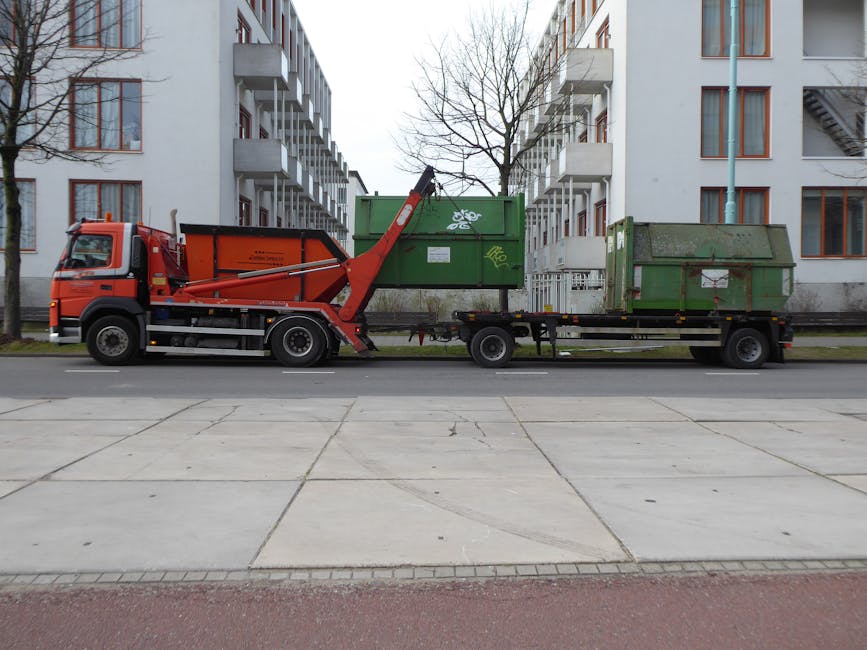
Skip hire vs man-and-van in Deptford: which saves?
If you are clearing out a flat, tidying a garage, or dealing with a small renovation in Deptford, the first question is usually not glamorous: what is the cheapest, least painful way to get rid of it all? That is where the skip hire vs man-and-van in Deptford: which saves? question really matters. On paper, both options can look similar. In real life, the savings depend on access, volume, timing, and how much heavy lifting you want to do yourself.
To be fair, people often start with a price in mind and end up choosing on convenience. Then the road gets narrow, the waste piles up quicker than expected, and suddenly the "cheap" option is not cheap anymore. This guide breaks the choice down properly so you can see where the real costs sit, where the hidden extras creep in, and which service tends to suit which kind of job.
We will look at how each option works, what saves money in practical terms, where people go wrong, and how to make a sensible call for a Deptford property, whether that is a basement flat off a busy street, a family house, or a worksite with mixed waste. If you want a more complete view of waste handling and tidy-up services, you may also find our waste removal and pricing and quotes pages useful later on.
Table of Contents
- Why the choice matters in Deptford
- How each option works
- Key benefits and practical advantages
- Who each option is for
- Step-by-step guidance
- Expert tips for better results
- Common mistakes to avoid
- Tools, resources and recommendations
- Law, compliance, standards, and best practice
- Options and comparison table
- Case study or real-world example
- Practical checklist
- Conclusion
- Frequently asked questions
Why Skip hire vs man-and-van in Deptford: which saves? Matters
The cheapest waste option is not always the one with the lowest headline price. In Deptford, that matters more than people think. You are dealing with dense streets, parking pressure, shared access, and a mix of housing types. A skip may be fine on a wide driveway or a controlled site, but if there is nowhere legal and safe to place it, the cost can rise quickly or the job can become awkward. A man-and-van service can be far easier for tight access, though it often trades flexibility for convenience and labour.
There is also the time factor. A skip sits there for a period, which can suit a longer project. A man-and-van collection is usually much faster, which means less mess outside your property and less temptation to leave rubbish hanging around. That sounds small, but it is the sort of detail that saves stress on a wet Wednesday afternoon when a hallway is full of broken shelving and you just want the place back to normal.
Saving money in Deptford is really about matching the method to the job. A half-empty skip is wasted spend. A van that has to come back twice because the load was underestimated is wasted spend too. The smart choice is the one that fits the material, the access, and the pace of your project.
Practical takeaway: choose the option that best matches your waste volume and access. The cheapest looking quote can become the pricier one once loading time, parking, permits, and extra trips are counted.
How Skip hire vs man-and-van in Deptford: which saves? Works
Skip hire is straightforward: a container is delivered, you fill it over time, and it is collected later. It suits ongoing jobs where waste builds up over several days or weeks. The downside is that you need space for the skip, and in many locations you may need to consider permissions or placement limits. You also do the loading yourself, which can be fine for light, manageable waste, but less ideal for heavy furniture or builders' rubble if you do not have the right help.
Man-and-van clearance works differently. A team arrives with a vehicle, loads your waste for you, and takes it away in one go. That usually means less physical effort from you, and often less disruption overall. It is especially handy where access is tight, the waste is already gathered, or the job is time-sensitive. The trade-off is that the cost can reflect the labour and the speed, so it is not always the better bargain for larger volumes.
In simple terms, skip hire is often best when you want cheap storage for waste and can load it gradually. Man-and-van is often best when you want speed, labour included, and no container left outside. Which saves? It depends on whether you save money by doing the work yourself or save money by avoiding delays, lifting, and extra site hassle. Little things, yes, but they add up.
Key Benefits and Practical Advantages
Both methods have real strengths. The trick is not to fall for the idea that one is universally better. It is more nuanced than that.
Why skip hire can save
- Can be cost-effective for larger, ongoing clearances.
- Lets you fill waste at your own pace.
- Works well for projects that generate rubbish over several days.
- Useful when waste is mostly bulky but manageable to move safely.
Why man-and-van can save
- Includes labour, so you do not spend hours carrying items downstairs or out to the kerb.
- Useful for properties with narrow access or limited outside space.
- Often quicker to arrange and complete.
- Can reduce disruption if you need the area cleared the same day.
One practical advantage often overlooked is emotional relief. That sounds a bit soft, but it matters. If you have just finished a move, a bereavement clearance, or a stressful office tidy-up, not having to spend the next two days wrestling with broken furniture can be worth quite a lot. Not everything shows up on a spreadsheet.
If you are handling furniture-heavy waste, you may also want to look at furniture clearance or furniture disposal for a more targeted approach. Those services can be more efficient than treating everything as generic rubbish.
Who This Is For and When It Makes Sense
Different jobs call for different methods. A skip is often the better fit for builders, landlords, and homeowners with steady waste over time. A man-and-van service often suits flat clearances, office tidy-outs, and situations where lifting and access are the real problem rather than the waste volume itself.
Here are some clear examples.
- Skip hire often suits: garden makeovers, long renovations, DIY projects, and ongoing home clear-outs.
- Man-and-van often suits: end-of-tenancy clearances, moving day leftovers, single-room clearances, and mixed household waste that needs collecting quickly.
- Either could suit: garage clear-outs, loft declutters, and small office refreshes, depending on access and how much you can load yourself.
In Deptford flats and terraces, access is often the deciding factor. A skip may simply be awkward or impossible without upsetting neighbours, blocking the street, or making loading a nightmare. In those cases, a van-based collection may save more money because it saves time, parking headaches, and the risk of arranging the wrong size container.
For property-specific jobs, the following pages may help you narrow things down: flat clearance, house clearance, and office clearance. They each handle a different type of clearance, which is often the real key to saving.
Step-by-Step Guidance
If you want to make a money-smart choice rather than an impulse one, follow this simple process.
- Estimate the volume. Think in practical terms: a few bin bags, a roomful of mixed items, or a full renovation pile. If you are unsure, take photos and make notes.
- Separate waste by type. Mixed waste can cost more to deal with than clean, sorted material. Wood, soil, rubble, furniture, and general rubbish are not all the same.
- Check access honestly. Can a large vehicle park nearby? Can a skip sit safely where you need it? Can you carry items down stairs without a grim little workout? Be realistic.
- Compare the true job, not just the service label. Ask yourself whether you need storage time, labour, or both. That answer usually points you in the right direction.
- Factor in your own time and effort. If you need a full day off work to load a skip, the cheaper option may not be cheaper after all.
- Think about speed. If the waste has to go today, a man-and-van service may save more overall by avoiding delays and repeat handling.
- Use a proper quote process. Good providers will want a fair description of the load. That is normal. It helps avoid surprises.
A small but useful habit: take one quick photo from a doorway and one close-up. It sounds almost too simple, but it helps people estimate better. Saves everyone a headache.
Expert Tips for Better Results
After you have seen enough clearances, a few patterns become obvious.
First, do not pay for wasted capacity. If you know you only have a modest amount, do not over-order. A half-empty skip is one of the easiest ways to burn cash for no reason.
Second, do not underestimate labour. This is where people trip up. A load that looks "not too bad" can be a long carry from a top-floor flat, especially if the stairs are narrow and the lift is tiny or missing altogether. Suddenly the man-and-van option starts looking very sensible.
Third, sort the waste before collection. If you can separate reusable, recyclable, and general waste, you will often get a cleaner, more efficient process. It also helps with environmental responsibility, which many residents and businesses care about for good reason.
Fourth, plan around parking and neighbours. Deptford is busy. A vehicle blocking a tight street while you rummage for another sofa cushion is nobody's idea of fun. A little planning goes a long way.
Fifth, ask about what is excluded. Not every clearance quote covers the same things. It is worth checking exactly what is being taken so you do not end up with awkward leftovers. Nobody enjoys the "oh, that one too?" conversation halfway through.
If sustainability matters to you, take a look at recycling and sustainability. Choosing the right clearance method is only part of the picture; how items are handled afterwards matters too.
Common Mistakes to Avoid
Most money leaks happen because people guess. Understandable, but costly.
- Choosing on headline price alone. A cheaper quote can become expensive if it does not suit access or waste type.
- Ignoring parking or placement issues. In Deptford, that can be the difference between a smooth clearance and a miserable one.
- Mixing heavy and light waste without thinking it through. Heavy rubble and bulky furniture behave very differently on a quote.
- Forgetting about your own labour. If you have to do all the lifting, loading, and sorting, factor that in honestly.
- Leaving the job half-planned. A few extra bags or one old mattress can change the whole picture.
- Not checking what happens after collection. Responsible disposal should matter, especially if you care about legal and environmental expectations.
A slightly awkward truth: some people choose the "cheap" option, then spend the next day making three trips up and down stairs with a broken wardrobe door. That is not savings. That is exercise with regret.
Tools, Resources and Recommendations
You do not need fancy tools to make a good decision, but a few practical aids help.
- Phone photos. Best first step for estimating volume.
- Basic room-by-room list. Useful if the waste is spread across a flat, house, or office.
- Tape measure. Handy for checking whether bulky items will fit through hallways, lifts, or doorways.
- Simple sorting boxes or piles. Keep furniture, general rubbish, and recycling separate where possible.
- Notebook or notes app. A quick inventory stops items getting forgotten.
For broader clearance projects, you might also find these pages helpful: home clearance, loft clearance, garage clearance, and garden clearance. They are useful when waste comes from one part of the property rather than everywhere at once.
For businesses, a clearer option can sometimes be business waste removal. If your job is office-related, that can be a better fit than trying to force a domestic-style solution onto commercial waste.
Law, Compliance, Standards, or Best Practice
Waste disposal in the UK is not something to be casual about. You do not need to become an expert in environmental law to make a sensible choice, but you should be aware that waste has to be handled properly and by a suitable provider. That is especially relevant if your clearance includes mixed rubbish, electrical items, or materials from building works.
From a best-practice point of view, the key principles are simple: use a responsible operator, keep waste descriptions honest, and avoid leaving rubbish anywhere it should not be. If you are hiring a skip, make sure placement is safe and appropriate. If you are using a van-based clearance, confirm that the waste will be transported and dealt with correctly. In both cases, clarity is your friend.
For business customers, record-keeping and duty-of-care awareness matter even more. It is not just about clearing a room or site. It is about being able to show you took reasonable steps. That sounds dry, but in real life it is reassuring. No one wants messy questions later.
Our own approach to service standards, safety, and responsible handling is set out across pages such as health and safety policy, insurance and safety, and terms and conditions. If you are comparing providers, those are the kinds of details worth checking, even if they are not the most exciting reading on a lunch break.
Options, Methods, or Comparison Table
Here is a straightforward comparison to help you decide where the real savings usually sit.
| Factor | Skip hire | Man-and-van | Which often saves? |
|---|---|---|---|
| Best for | Ongoing waste, larger jobs, gradual loading | Quick clearances, tight access, labour included | Depends on project type |
| Labour from you | High | Low | Man-and-van if your time matters |
| Space needed | More space, good placement needed | Minimal space at your property | Man-and-van in tight Deptford streets |
| Time on site | Longer, as you fill it | Shorter, usually one visit | Man-and-van for speed |
| Cost control | Good if you fill it fully | Good if the load is ready to go | Skip hire for bigger volumes |
| Convenience | Moderate | High | Man-and-van |
| Risk of paying for unused capacity | Higher | Lower | Man-and-van for small loads |
The honest answer is that the saving comes from fit. If you have a lot of waste and can load it over time, a skip can be very efficient. If your challenge is access, lifting, or speed, a man-and-van service often saves more in the real world, even if the upfront quote looks a little higher. That is the part people miss.
Case Study or Real-World Example
Imagine a small flat clearance in Deptford after a tenant moves out. There are a few pieces of furniture, several bags of mixed rubbish, an old TV unit, and some loose items from cupboards. The stairwell is narrow. Parking is awkward. The landlord wants it cleared quickly so decorating can start.
In that kind of situation, skip hire may look cheap at first, but it is often clumsy. Getting a skip close enough, keeping it safe, and then loading awkward items down several flights of stairs can wipe out the advantage pretty fast. A man-and-van collection is usually easier because the team can remove the bulky items directly, clear the mess in one go, and leave the property ready for the next step.
Now switch to a house garden project with branches, soil, and old fencing. If the waste will be produced over a week or two, a skip can make more sense. You can keep filling it as work progresses. No rush, no second-guessing, just a steady staging area for the debris. Same borough, same general problem, very different answer.
That is why the question is not "which is cheaper?" in the abstract. It is "which is cheaper for this exact job?" The difference is often more obvious once you stand in the space and look at the pile in daylight.
Practical Checklist
Use this before you book anything.
- Have I estimated the waste volume realistically?
- Is access easy enough for a skip or a collection vehicle?
- Do I need labour help, or can I load waste myself?
- Will the waste be ready all at once, or added gradually?
- Are there stairs, lifts, narrow hallways, or parking issues?
- Do I know what types of waste are included?
- Am I comparing like for like when I look at quotes?
- Would a property-specific service be better, such as house, flat, loft, or office clearance?
- Have I thought about recycling and responsible disposal?
- Do I need the job done quickly, or can it wait a few days?
If you can answer those clearly, you are already ahead of most people making the same decision. Not by a mile, perhaps. But enough to avoid a costly muddle.
Conclusion
So, which saves more in Deptford: skip hire or man-and-van? The truthful answer is that neither wins every time. Skip hire usually saves more on larger, slower, self-loaded jobs where you have the room and the time. Man-and-van often saves more on tight-access, labour-heavy, or urgent clearances where convenience becomes part of the saving.
If you are trying to keep costs sensible, focus on the practical shape of the job rather than the label. Think about space, volume, timing, and how much lifting you want to do yourself. That simple shift usually leads to a better decision, and fewer regrets later. Which, let's face it, is the real aim.
If you are still weighing up the options, start by comparing your waste type and access, then look at the service that best fits the reality on the ground. A little thought upfront can save a lot of hassle later, and the relief when the space is finally clear is genuinely hard to beat.
Get a free quote today and see how much you can save.
Frequently Asked Questions
Is skip hire always cheaper than a man-and-van in Deptford?
No. Skip hire can be cheaper for larger, longer jobs, but man-and-van can save more if you need labour, fast removal, or have limited access. The cheapest option depends on the job shape, not the headline price alone.
Which option is better for a small flat clearance?
Man-and-van is often better for a small flat clearance because the team handles the lifting and removes everything in one visit. In a tight stairwell or permit-sensitive street, that usually makes life easier.
When does skip hire make the most sense?
Skip hire tends to make sense when you have a lot of waste, can load it over time, and have suitable space for the container. It is especially handy for renovations, garden work, and ongoing DIY projects.
Do I need to sort my waste before booking?
It helps, yes. Sorting waste into general rubbish, furniture, garden waste, and building materials makes it easier to judge the right service and can prevent awkward surprises on the day.
What if I only have a few bulky items?
A man-and-van service is usually the better fit for a few bulky items. Paying for a skip just to remove a sofa, a mattress, or a couple of cabinets often makes little sense.
Is man-and-van more convenient for busy Deptford streets?
Usually, yes. It avoids leaving a container in place and can reduce the problems caused by narrow roads, parking pressure, and shared access. That is a big deal in many parts of Deptford.
Can a skip save money if I am doing the loading myself?
Yes, especially if you already have the labour and the waste will build up over several days. The savings come from using your own time and space efficiently.
What should I ask before accepting a quote?
Ask what is included, what counts as mixed waste, whether labour is part of the price, and whether any items need special handling. Clear answers now prevent frustration later.
Is there a greener choice between the two?
Either can be environmentally responsible if the waste is handled properly. The greener choice is often the one that reduces wasted trips, supports sorting, and sends materials for appropriate recycling where possible.
What if I am clearing a house, not just a room?
For bigger domestic projects, house clearance or a similar tailored service may be more efficient than trying to force a one-size-fits-all solution. It can save both time and unnecessary handling.
How do I know if access is too tight for a skip?
If you have no safe place for delivery, limited frontage, or parking restrictions that would make placement awkward, it may be too tight. In those cases, a van-based clearance is often the safer and simpler route.
Where can I learn more about responsible disposal and pricing?
Our recycling and sustainability and pricing and quotes pages are a good place to start if you want a clearer picture of how costs and disposal approach fit together.